Yucca: The Spiky Desert Plant That Thinks Your House Is a Vacation
A tough, sun-loving desert plant with sword-like leaves that treats your sunny window like a resort. Full sun, gritty soil, and rare watering are all it asks.
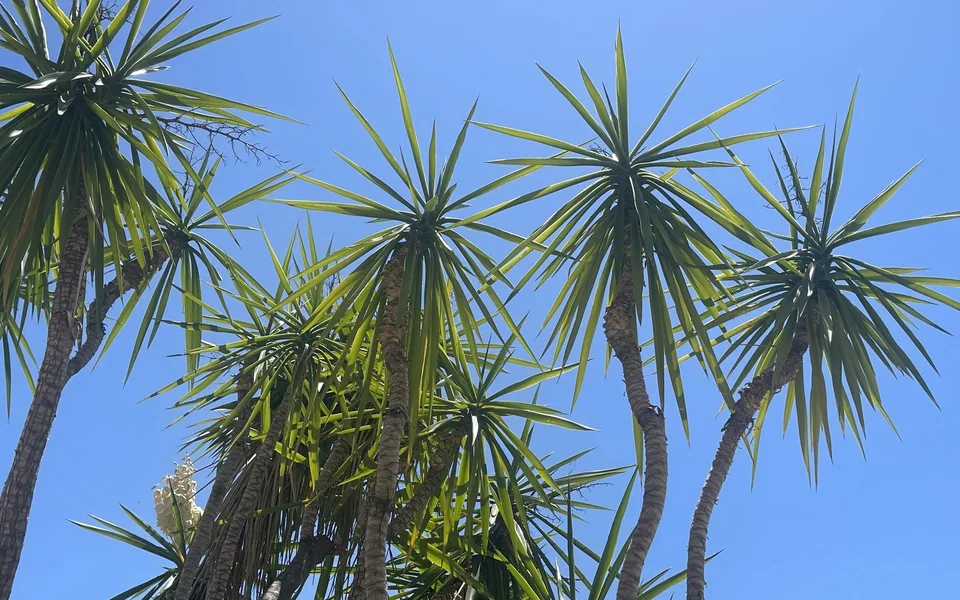
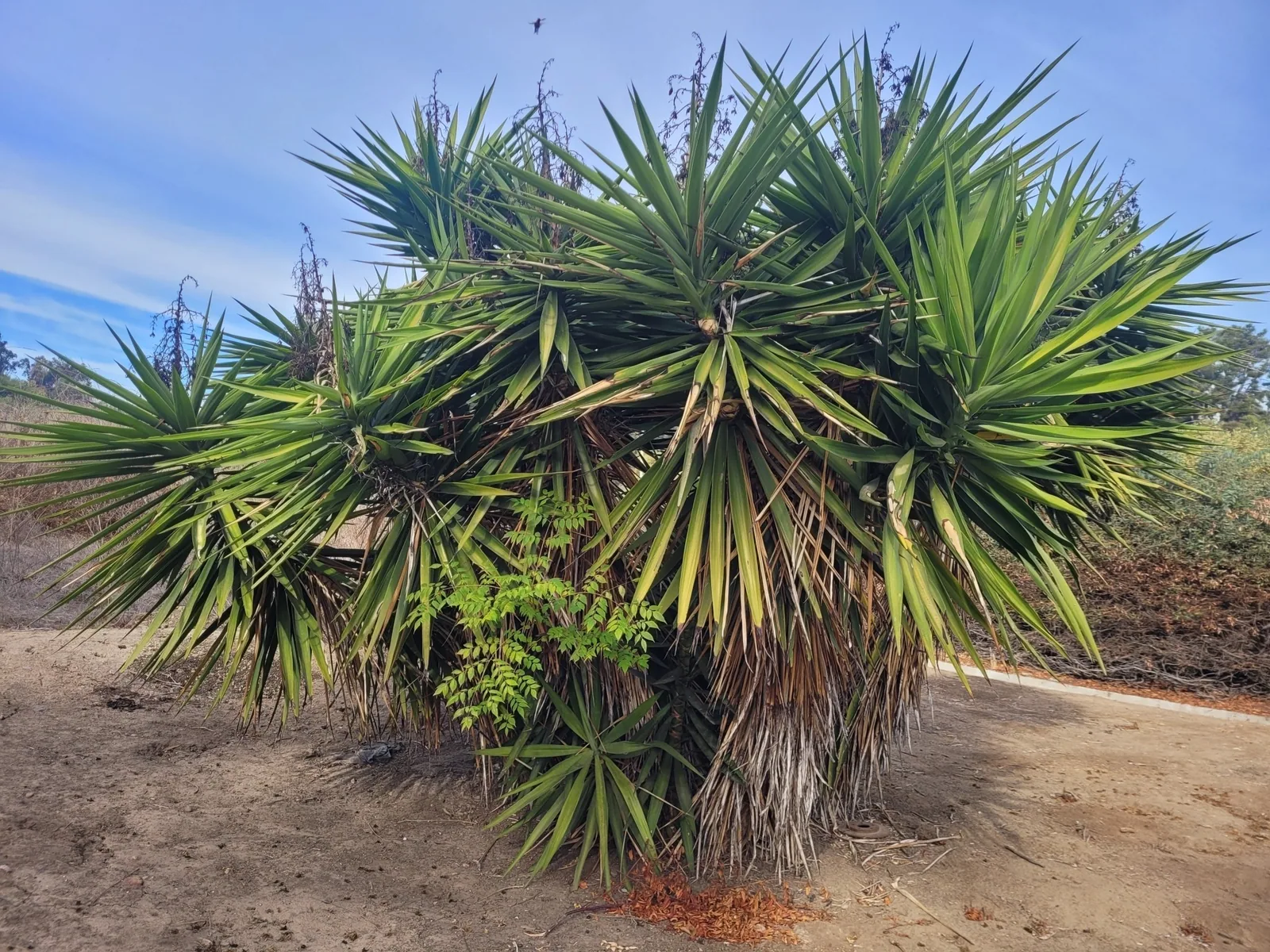
The indoor yucca (Yucca elephantipes / Yucca gigantea, the spineless yucca) has a thick, woody trunk topped with stiff, sword-like, blue-green leaves. It looks like something from the American Southwest because it basically is: a tough, drought-loving plant that treats your sunny living room like a resort. It’s slow-growing, forgiving, and can live for decades. The only things it asks are sun and restraint with the watering can.
Where to put it (light)
Bright light, including direct sun. A south- or west-facing window is ideal. It tolerates bright indirect light but gets leggy and weak in medium or low light. It’s one of the few houseplants that can’t get too much sun indoors.
Temperature
60–85°F (16–29°C) and it handles heat easily. It tolerates dips to 45°F (7°C) if the soil is dry. No frost.
Watering
Let the soil dry out completely between waterings, roughly every 2–3 weeks in summer and monthly in winter. Overwatering is the only common way to kill a yucca: soft, brown, leaning trunks are rot. When in doubt, don’t water.
Feeding
Once or twice in spring/summer with a balanced fertilizer at half strength. That’s plenty.
Soil
Cactus/succulent mix or a well-draining potting mix cut with plenty of perlite or sand. Heavy pot recommended; it gets top-heavy.
Humidity
Low to average. It’s a dry-air plant. Bathrooms are not its friend.
Common pests
Mealybugs, scale, and spider mites occasionally. Fungus gnats if overwatered. Generally pest-resistant. Wipe leaves with a damp cloth.
Propagation
Difficulty: Easy. Cane cuttings or offsets. Cut a section of trunk, let it dry a few days, and plant the bottom end in dry, gritty soil; it roots in 1–2 months. Pups at the base can be separated with roots.
Also worth knowing
Toxicity: toxic to cats and dogs if chewed. Mature size: 5–8 ft (1.5–2.5 m) indoors. Repot every 2–3 years in a heavy pot. Cut the trunk at any height; it sprouts new heads below the cut.
The leaf tips are stiff enough to poke, so keep it out of hallways. Toxic to pets if chewed. Cut the trunk to control height and it’ll sprout new heads.