Schefflera: The Umbrella Plant That Just Wants a Corner and Some Light
A fast-growing umbrella-shaped tree that tolerates a wide range of indoor conditions. Bright indirect light and letting the soil dry slightly keep it full and leaf-drop-free.
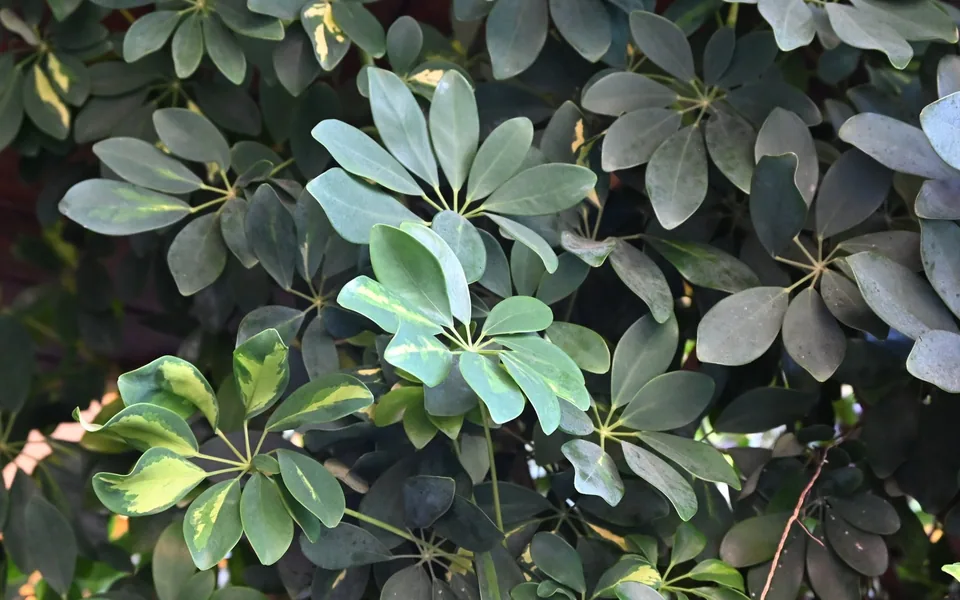
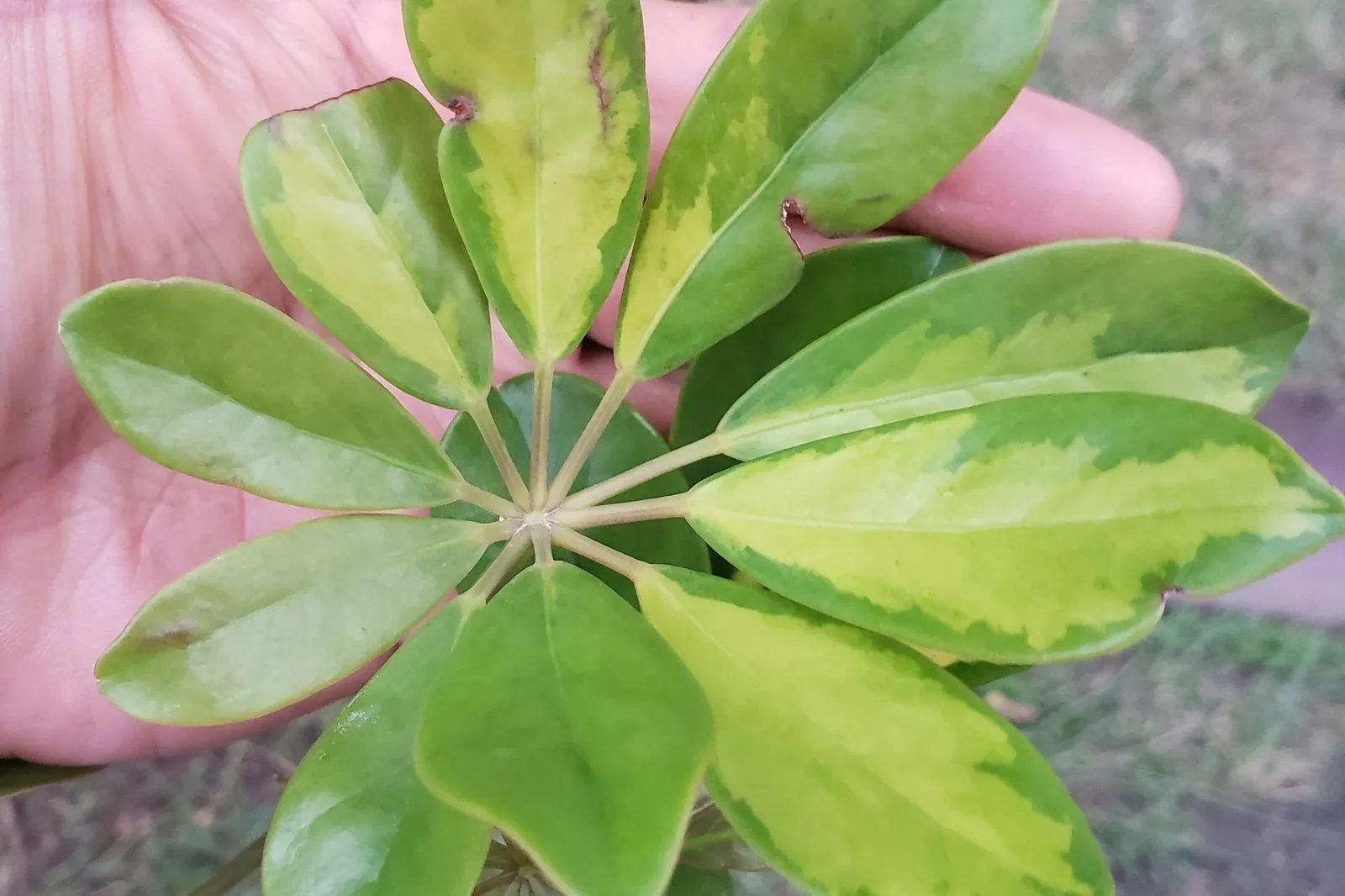
The umbrella plant (Schefflera actinophylla, or the smaller-leaved dwarf form Schefflera arboricola) gets its name from the way its glossy leaflets fan out from a central point like the ribs of an umbrella. It’s a fast-growing, tree-like plant that can reach 6–8 feet (2–2.5 m) indoors and has been a reliable office and lobby plant for decades because it tolerates a wide range of conditions. Variegated forms add a splash of cream and gold.
Where to put it (light)
Bright, indirect light. It handles medium light but gets leggy and drops leaves in dim rooms. Variegated types need more light. Direct sun scorches the leaflets. Rotate it so it grows evenly.
Temperature
60–80°F (16–27°C). Keep above 50°F (10°C). Cold drafts cause leaf drop.
Watering
Water when the top 1–2 inches of soil are dry, roughly weekly in summer and every 2 weeks in winter. Overwatering causes yellow, dropping leaves and root rot; it would rather be slightly dry.
Feeding
Monthly in spring and summer with a balanced liquid fertilizer at half strength. None in winter.
Soil
A well-draining, all-purpose potting mix with perlite. Repot every couple of years; it grows fast.
Humidity
Average household humidity is fine. 50%+ helps keep spider mites away.
Common pests
Spider mites (the most common), scale, mealybugs, aphids, and thrips. Scale hides along stems and leaf undersides. Wipe leaves regularly.
Propagation
Difficulty: Moderate. Stem cuttings. Take a 4–6 in (10–15 cm) tip, dip in rooting hormone, and root in moist soil with a bag over it for humidity. Roots in 4–6 weeks. Air layering works for thick stems.
Also worth knowing
Toxicity: toxic to cats and dogs if chewed. Mature size: 4–8 ft (1.2–2.5 m) indoors. Repot every 2–3 years. Cut back leggy stems; it regrows readily from old wood.
Prune the tips to keep it bushy; it responds well to a hard cut. Toxic to pets if chewed.