Maranta: The Prayer Plant That Folds Its Hands Every Night
A low, spreading prayer plant with red-veined leaves that fold up at night. Pet-safe, but sensitive to tap water and dry air; give it filtered water and 50%+ humidity.
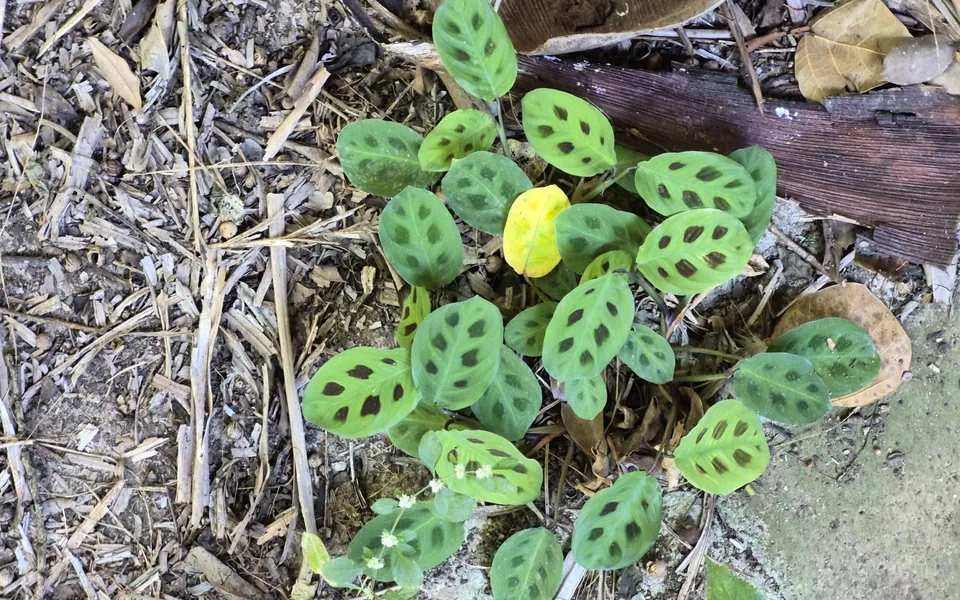
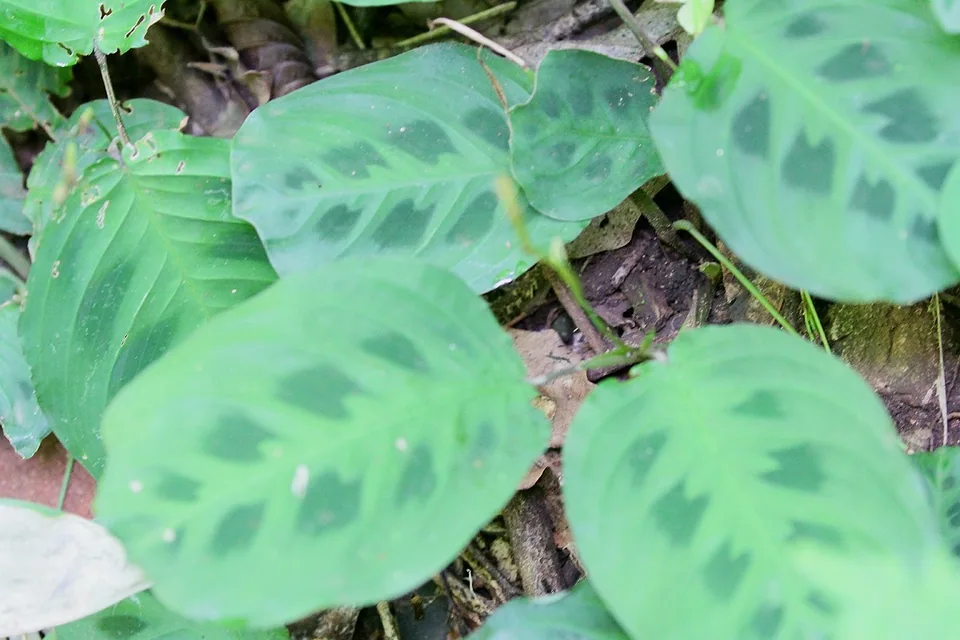
Maranta leuconeura is famous for its nighttime ritual: as the light fades, the leaves fold upward like praying hands, then flatten out again in the morning. Watch a time-lapse and you’ll be hooked. The leaves are just as impressive up close: oval, velvety green with red or pink herringbone veins (the “red-veined” or erythroneura variety is the celebrity). It’s a low, spreading plant that’s ideal for a shelf or hanging basket.
Where to put it (light)
Medium to bright, indirect light. North or east windows are ideal. It tolerates lower light better than most patterned plants, but direct sun fades the colors and scorches leaves.
Temperature
65–80°F (18–27°C). Keep above 60°F (16°C). Drafts and heat vents cause leaf curling and browning.
Watering
Keep the soil consistently lightly moist; water when the top inch is dry. Never let it dry out completely and never let it sit soggy. Use filtered, distilled, or rain water; it’s sensitive to fluoride and chlorine, which show up as brown leaf tips.
Feeding
Every 2–4 weeks in spring and summer with a balanced liquid fertilizer at half strength. Monthly or none in winter.
Soil
A peat- or coir-based mix with perlite, moisture-retentive but well-draining. Shallow pots suit its shallow roots.
Humidity
50–60% or higher. Dry air brings brown crispy edges and spider mites. Humidifier, pebble tray, grouping, or a bathroom shelf all work.
Common pests
Spider mites are the main threat in dry air, followed by mealybugs, aphids, and scale. Keep leaves clean and humidity up.
Propagation
Difficulty: Easy. Stem cuttings with a node, rooted in water or moist soil under humid conditions. Division at repotting also works for large plants.
Also worth knowing
Toxicity: non-toxic to cats and dogs. Mature size: 6–12 in (15–30 cm) tall, spreading wider. Repot every 1–2 years in a shallow pot. Trim leggy stems to keep it compact.
Non-toxic to cats and dogs, which makes it one of the safest patterned plants for pet households.