Lipstick Plant: Glossy Vines With Flowers That Look Like They're Wearing Makeup
A glossy trailing vine with tubular red flowers that emerge like lipstick from a tube. Pet-safe, it blooms with bright indirect light, airy soil, and higher humidity.
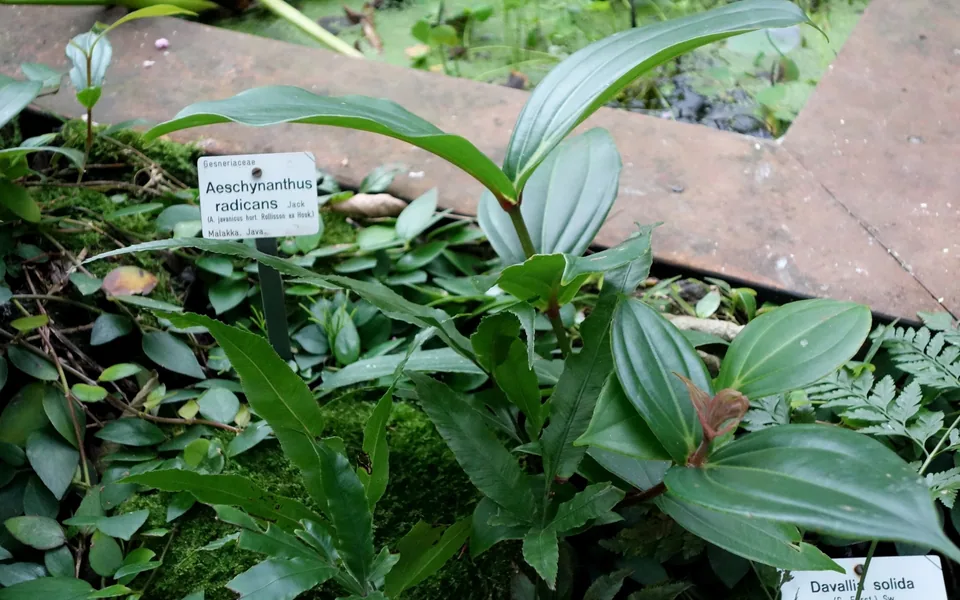
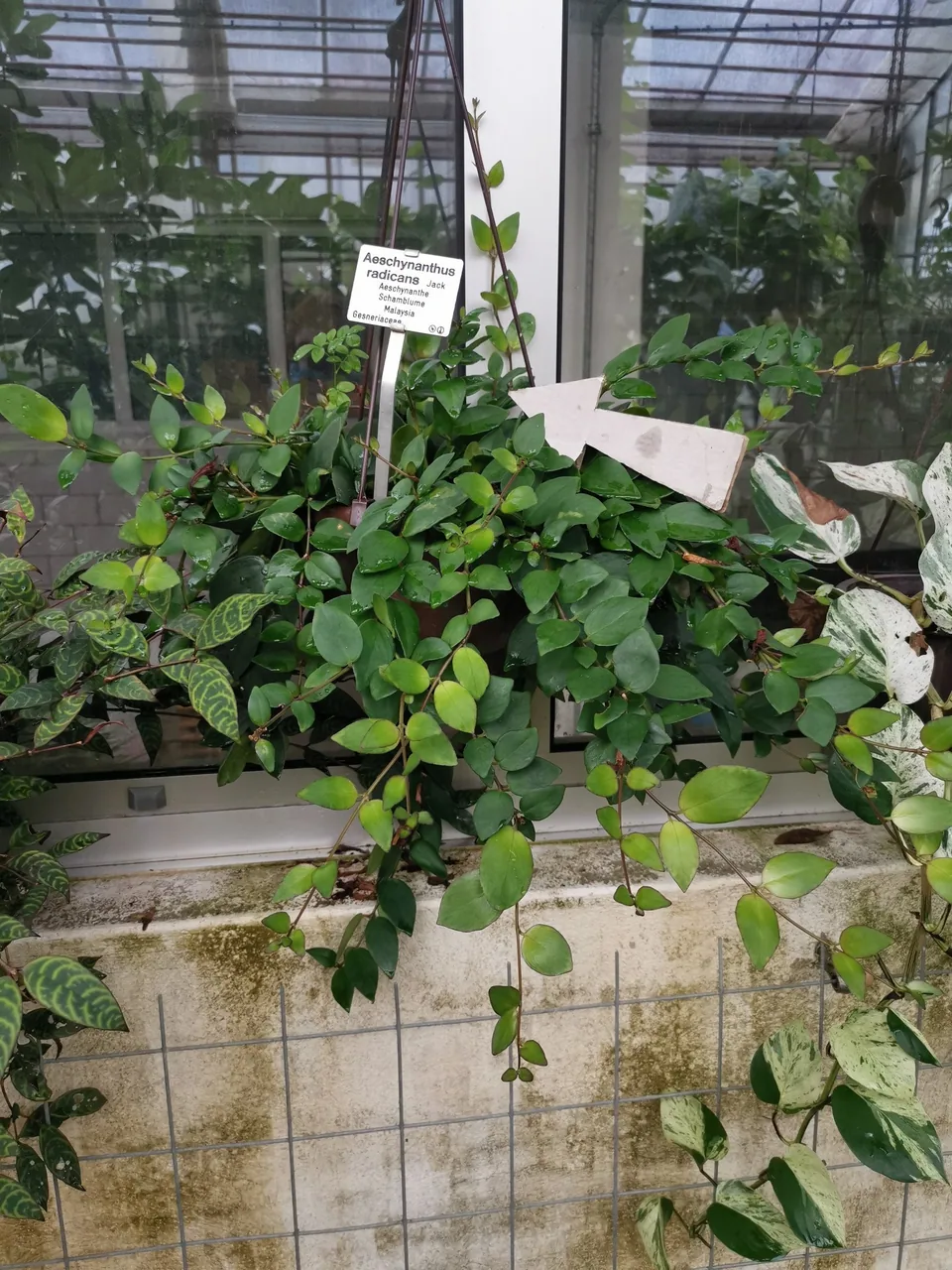
Aeschynanthus, the lipstick plant, gets its name from the flowers: tubular red blooms that emerge from dark maroon calyxes exactly like a lipstick sliding out of its tube. The trailing vines carry waxy, glossy leaves (the “Rasta” variety has curly ones), and a well-cared-for plant will bloom repeatedly from spring through fall. It’s a relative of African violets, and it shares their love of warmth and humidity.
Where to put it (light)
Bright, indirect light. It needs good light to flower; an east window or near a south window with sheer curtains is ideal. Direct sun scorches and fades the leaves; low light means no blooms.
Temperature
Warm: 65–80°F (18–27°C). Keep it above 60°F (16°C). A slightly cooler, drier period in late winter (around 60°F / 16°C) can encourage a flush of flowers.
Watering
Water when the top inch of soil is dry. It likes lightly moist soil but is prone to root rot if kept soggy. Let it dry a little more in winter. Use room-temperature water.
Feeding
Every 2–4 weeks in spring and summer with a balanced or high-phosphorus (bloom) liquid fertilizer at half strength. Monthly or none in winter.
Soil
A light, airy, well-draining mix: potting soil with perlite and orchid bark, or an African violet mix. It’s an epiphyte and wants air around the roots.
Humidity
50–60%+ keeps the leaves glossy and the buds from dropping. Humidifier, pebble tray, or grouping with other plants.
Common pests
Aphids, mealybugs, spider mites, and scale. Check the vine tips where aphids gather. Wipe the leaves and treat with insecticidal soap.
Propagation
Difficulty: Easy to moderate. Stem cuttings. Take 4 in (10 cm) tip cuttings, remove the lower leaves, and root in moist mix with high humidity (a bag over the pot helps). Roots in 3–4 weeks.
Also worth knowing
Toxicity: non-toxic to cats and dogs. Mature size: vines 2–3 ft (60–90 cm). Repot every 2 years; it blooms better slightly root-bound. Prune after flowering to encourage branching and more blooms.
Prune after flowering to keep it full; it blooms on new growth. Non-toxic to cats and dogs.