Caladium: Paper-Thin Leaves That Look Like They Were Painted by Hand
A tuber-grown plant with paper-thin, hand-painted leaves that goes fully dormant in winter. It wants warmth, filtered light, moist soil in season, and high humidity.
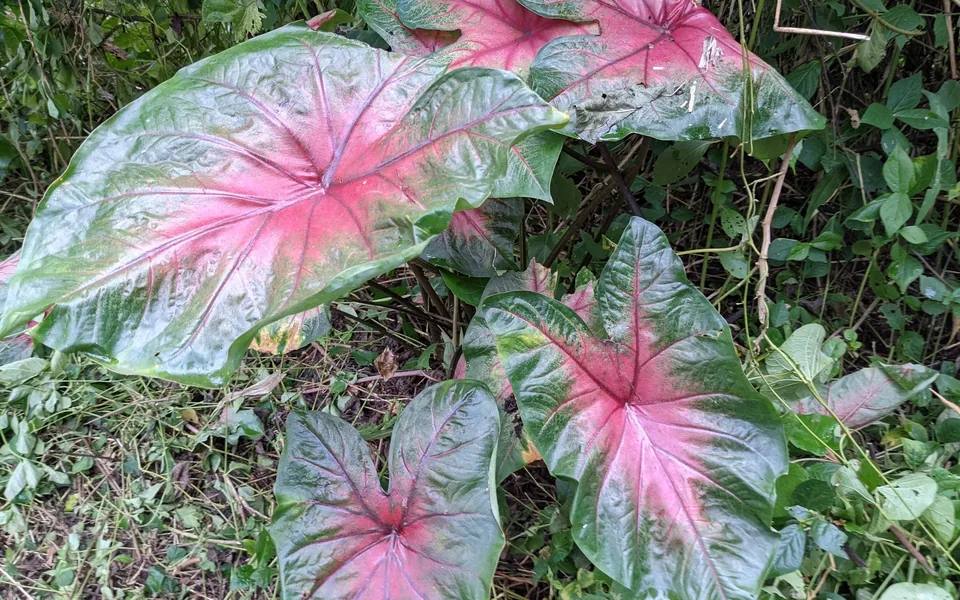
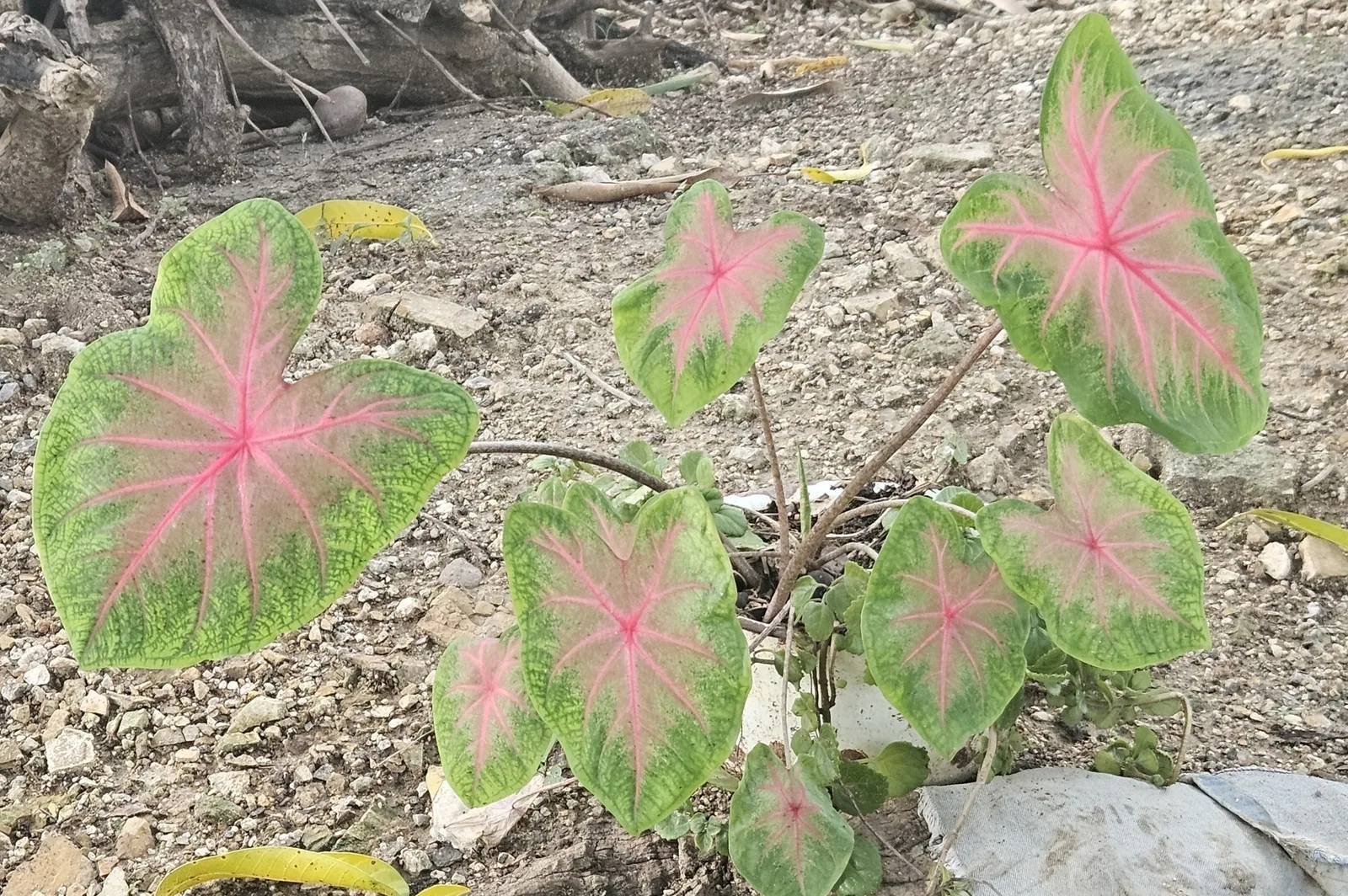
Caladiums grow from a tuber and produce translucent, heart-shaped leaves splashed with pink, red, white, and green in patterns no two leaves seem to share. They’re also one of the few houseplants that go fully dormant for the winter; every leaf dies back, and beginners panic and throw the pot out. Don’t. The tuber is alive and just taking a nap.
Where to put it (light)
Bright, indirect or filtered light. East windows or a spot behind a sheer curtain. Direct sun scorches those thin leaves; too little light and the colors fade toward green.
Temperature
Warm: 70–85°F (21–29°C). Keep it above 60°F (16°C) during the growing season. Cold temperatures trigger dormancy early.
Watering
While it’s leafed out, keep the soil consistently moist but never soggy. When leaves start yellowing and dying back in fall, reduce watering, and once fully dormant keep the tuber nearly dry. Resume watering when new growth appears in spring.
Feeding
Every 2–4 weeks during active growth with a balanced liquid fertilizer at half strength. Nothing during dormancy.
Soil
A rich, loose, well-draining mix: potting soil with perlite and some peat or coir. Good drainage matters; wet tubers rot.
Humidity
60% or higher keeps the leaves from browning at the edges. A humidifier, pebble tray, or a bright bathroom is ideal. Caladiums are, at heart, a swamp plant.
Common pests
Aphids, mealybugs, spider mites, and thrips. Slugs if it summers outdoors. Check the undersides of leaves; treat with insecticidal soap.
Propagation
Difficulty: Moderate. Tuber division. During dormancy, cut the tuber into sections that each have at least one ‘eye’ (growth bud), dust the cuts with cinnamon, let them dry a day, and plant in spring.
Also worth knowing
Toxicity: toxic to cats, dogs, and people if chewed. Mature size: 1–2 ft (30–60 cm). Repot or restart tubers each spring. Full winter dieback is normal, not death.
Store the dormant tuber in its pot (or in dry peat) somewhere around 60°F (16°C) over winter, and you’ll get the whole show again next year. Toxic to pets if chewed.