Anthurium: The Flamingo Lily That Blooms Almost Year-Round
A glossy, near-constant bloomer whose red 'flowers' are actually modified leaves. It likes bright indirect light, airy orchid-style soil, and higher humidity.
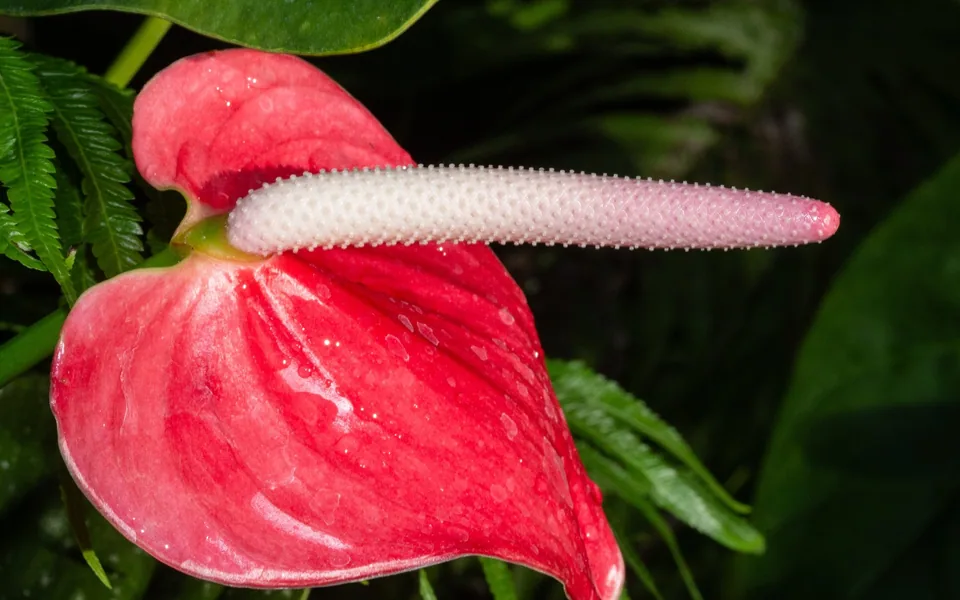
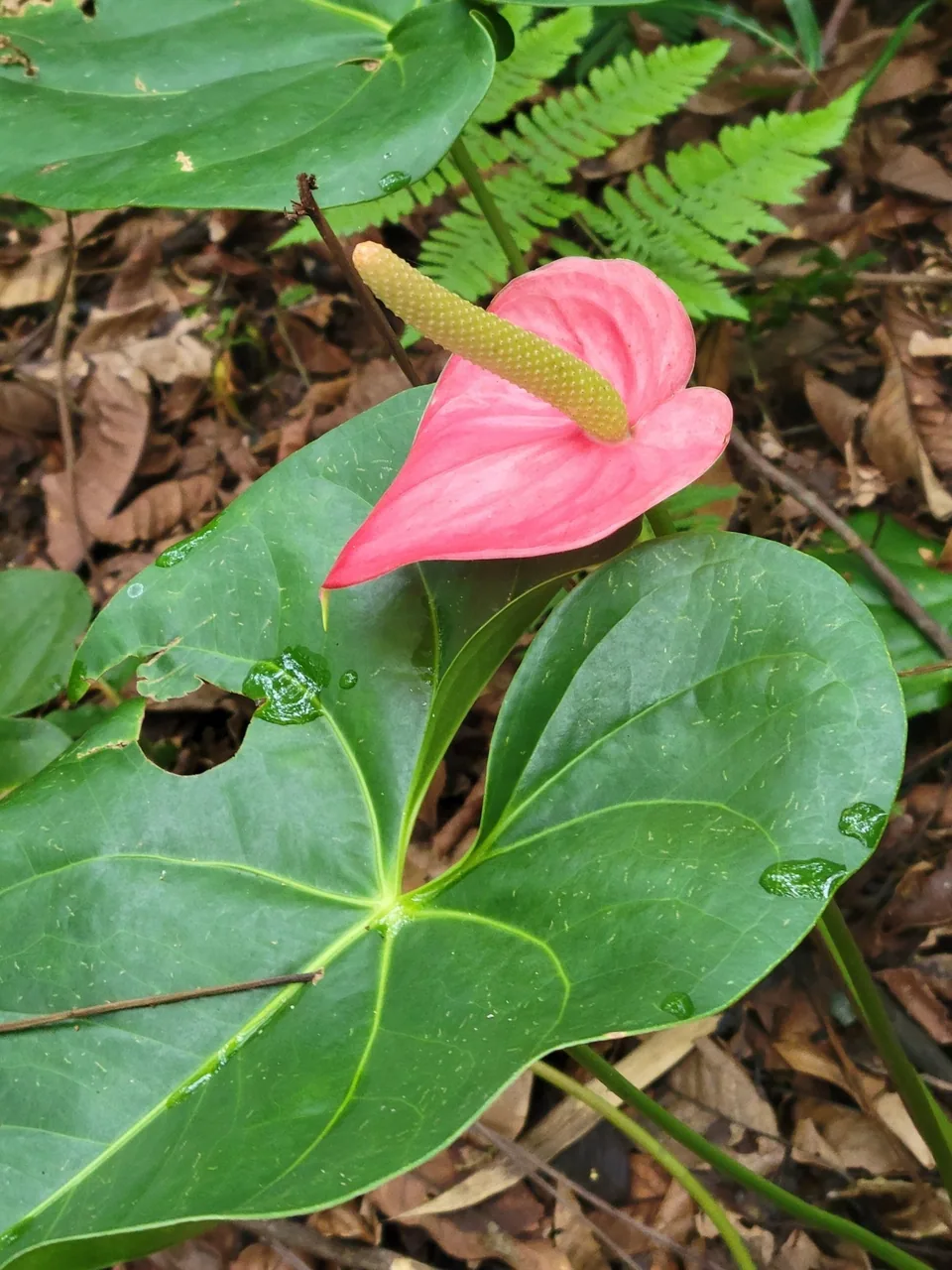
The Anthurium’s glossy red “flowers” aren’t flowers at all; they’re modified leaves called spathes, and the real flowers are the tiny bumps on that spike in the middle. Botanical trickery aside, this is one of the few houseplants that will bloom nearly year-round indoors, and those waxy heart-shaped spathes last for weeks. It’s also on the NASA clean-air list, so it’s doing double duty.
Where to put it (light)
Bright, indirect light. East-facing windows are ideal. It’ll survive in medium light but won’t bloom much. Direct sun burns the leaves and fades the spathes.
Temperature
65–80°F (18–27°C) is the comfort zone. Below 60°F (16°C) growth slows; below 50°F (10°C) it can be damaged. Avoid drafts and heater vents.
Watering
Water when the top inch of soil is dry. It likes to be lightly moist but hates sitting wet; its roots need oxygen. Overwatering causes yellow leaves and root rot faster than almost anything else you can do to it.
Feeding
Feed every 6–8 weeks with a balanced or high-phosphorus (bloom) fertilizer at quarter to half strength. Too much fertilizer scorches the roots.
Soil
A coarse, airy mix like you’d use for orchids or aroids: potting soil with lots of orchid bark and perlite. It’s an epiphyte in the wild, so it wants air around its roots.
Humidity
Prefers 60% or higher. Average homes are a bit dry for it, so a humidifier or pebble tray helps prevent brown leaf tips.
Common pests
Mealybugs, aphids, scale, spider mites, and thrips. Check the leaf axils and undersides. Wipe leaves with a damp cloth monthly to keep the shine and deter pests.
Propagation
Difficulty: Moderate. Division at repotting time: separate side shoots that have their own roots. Stem cuttings with a node and an aerial root also work in moist sphagnum.
Also worth knowing
Toxicity: toxic to cats, dogs, and people if chewed. Mature size: 1–2 ft (30–60 cm). Repot every 2–3 years. Cut off spent spathes at the base to encourage new blooms.
Keep it out of reach of pets and kids; all parts are toxic if chewed. Otherwise, sit back and enjoy the bloom show.