Fiddle-Leaf Fig: The Celebrity Plant That Hates Being Moved
The magazine-famous fig with giant violin-shaped leaves. Not hard, just consistent: lots of bright light, a fixed spot, and watering only when the top two inches are dry.
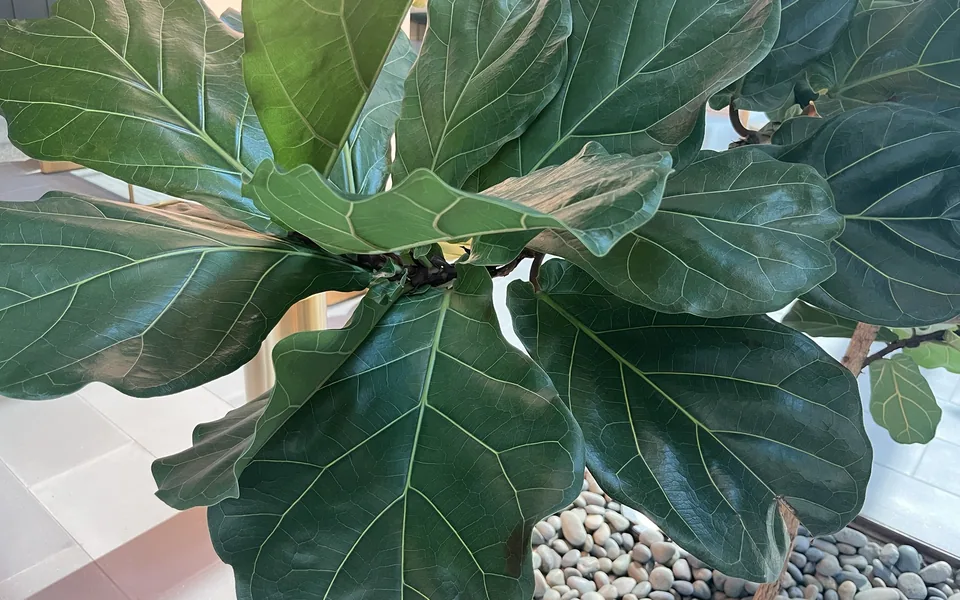
The fiddle-leaf fig (Ficus lyrata) is the plant in every design magazine: huge, violin-shaped, leathery leaves on a tree-like trunk. It’s a stunner. It also has a reputation for dropping leaves the moment you move it, breathe on it, or change its watering schedule. The secret is that it isn’t hard; it’s just consistent. Find it a good spot, settle into a routine, and leave it there.
Where to put it (light)
Bright, indirect light with some direct morning sun. It needs more light than most people give it; a spot right in front of an east or south window (with a sheer curtain for harsh afternoon sun) is ideal. Too little light means leaf drop and brown spots. Rotate it a quarter turn weekly, but otherwise don’t move it.
Temperature
65–80°F (18–27°C). Keep above 55°F (13°C). Cold drafts and heating vents both trigger leaf drop.
Watering
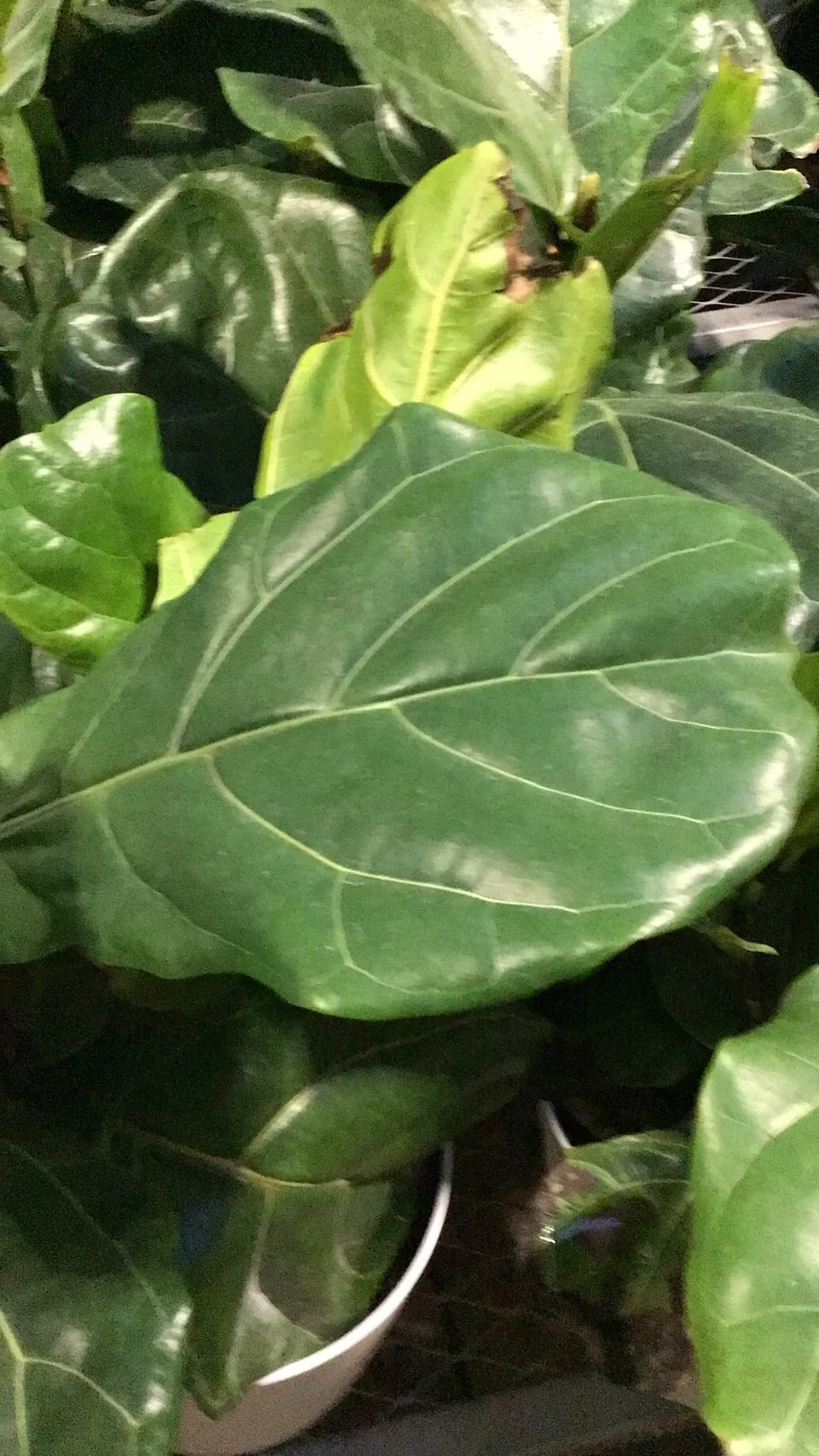
Water thoroughly when the top 2 inches of soil are dry, then let it drain completely. Roughly every 7–10 days in summer, less in winter. Brown spots spreading from the leaf center usually mean overwatering; dry brown edges usually mean underwatering. Consistency matters more than exact frequency.
Feeding
Monthly in spring and summer with a balanced liquid fertilizer (some growers prefer 3-1-2 ratio) at half strength. None in winter.
Soil
A well-draining potting mix with perlite and bark. It hates sitting in wet soil, and it also hates a pot that’s much too big for its roots.
Humidity
40–60% is fine. Wipe the big leaves with a damp cloth monthly; dust really cuts down on the light they can absorb.
Common pests
Spider mites, mealybugs, scale, and aphids. Fungus gnats in wet soil. The big leaves make inspection easy; check both sides.
Propagation
Difficulty: Moderate. Stem cuttings with 2–3 leaves, rooted in water (4–6 weeks) or moist soil. Air layering is the most reliable method for woody stems. Single leaves will root but never grow into a plant.
Also worth knowing
Toxicity: toxic to cats and dogs if chewed; sap can irritate skin. Mature size: 6–10 ft (2–3 m) indoors. Repot every 1–2 years. Notch or prune the trunk to encourage branching.
Toxic to pets if chewed, and the sap can irritate skin. It’s a commitment plant. Treat it like a roommate with strong opinions and it’ll grow into a 6-foot showpiece.