String of Pearls: A Necklace That Dies if You Water It on a Schedule
A trailing succulent of pea-shaped beads that needs bright light on the top of the pot, gritty soil, and watering only when completely dry. Overwatering turns it to mush.
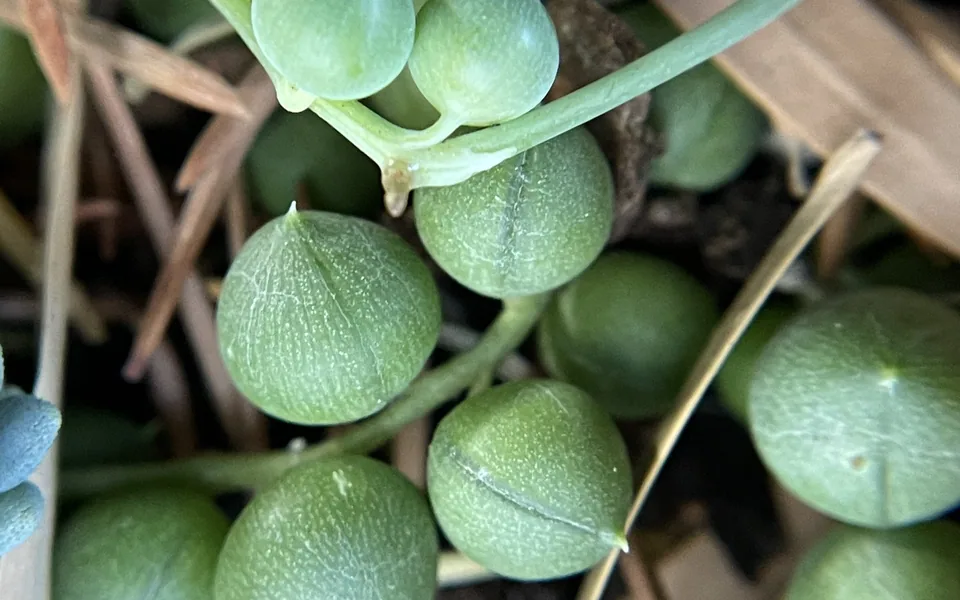
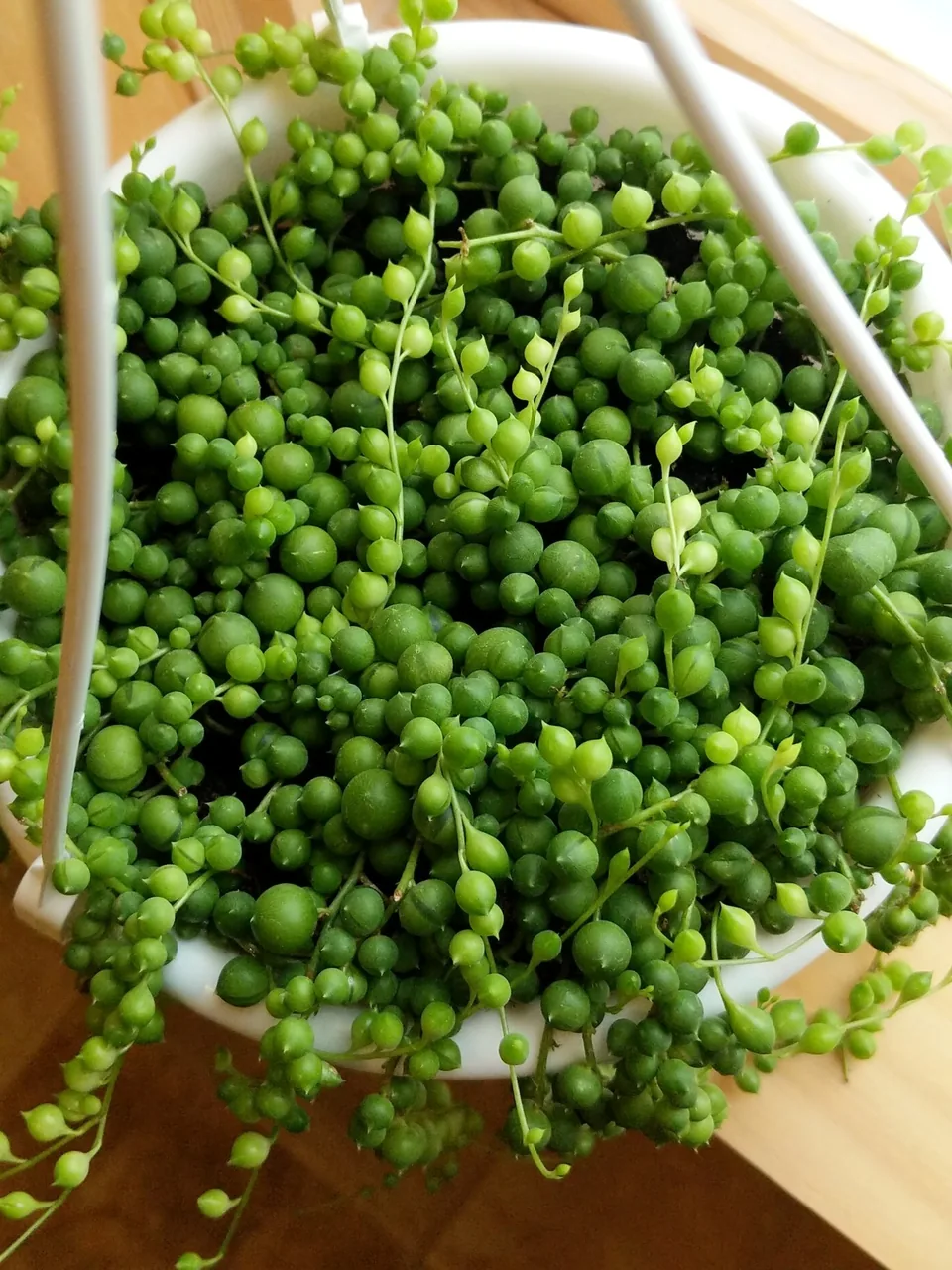
String of pearls (Curio rowleyanus, formerly Senecio rowleyanus) trails long strands of pea-shaped green beads that look like a jeweler’s display. Each “pearl” is a modified leaf with a tiny transparent window that lets light in. It’s a succulent from South Africa, and it’s in the high-maintenance category not because it needs a lot, but because it needs exactly the right amount of very little. Overwater once too often and it collapses into mush.
Where to put it (light)
Bright, indirect light with a few hours of gentle direct morning sun. A bright east window, or a spot near a south window that’s shaded from harsh afternoon rays. Too little light and the pearls space out along the strand and shrivel. Make sure the top of the pot gets light, not just the trailing strands.
Temperature
60–80°F (16–27°C). It appreciates a cooler winter of around 55–60°F (13–16°C), which encourages its small, cinnamon-scented white flowers. Keep it above 45°F (7°C).
Watering
Soak, then let it dry out completely. Every 2 weeks in summer, monthly or less in winter. Slightly wrinkled or flattened pearls mean thirsty; mushy, yellow, or translucent pearls mean too wet. Water at the soil, not over the strands.
Feeding
Once or twice in spring/summer with a half-strength succulent fertilizer. That’s all.
Soil
Gritty succulent/cactus mix with extra perlite or pumice. A shallow pot with drainage is ideal because the roots are shallow. Terracotta helps it dry.
Humidity
Low to average. Keep it out of humid bathrooms.
Common pests
Mealybugs and aphids, which hide between pearls. Fungus gnats if the soil stays wet. Treat with insecticidal soap or diluted rubbing alcohol.
Propagation
Difficulty: Easy. Stem cuttings. Snip 3–4 in (8–10 cm) strands, lay them on top of dry succulent mix (or pin them down with a paperclip), and they root at the nodes in 2–3 weeks.
Also worth knowing
Toxicity: toxic to cats and dogs if chewed. Mature size: strands 2–3 ft (60–90 cm). Repot every 1–2 years in a shallow pot. Coil cuttings on the soil surface to refill a thinning top.
Lay a few strands across the soil surface and they’ll root, filling in a thin pot. Toxic to pets if chewed, so hang it well out of reach.