Nepenthes: The Tropical Pitcher Plant With Hanging Bug Traps
A tropical pitcher plant that grows hanging bug traps. It needs bright filtered light, distilled water, nutrient-free moss, warmth, and high humidity to keep producing pitchers.
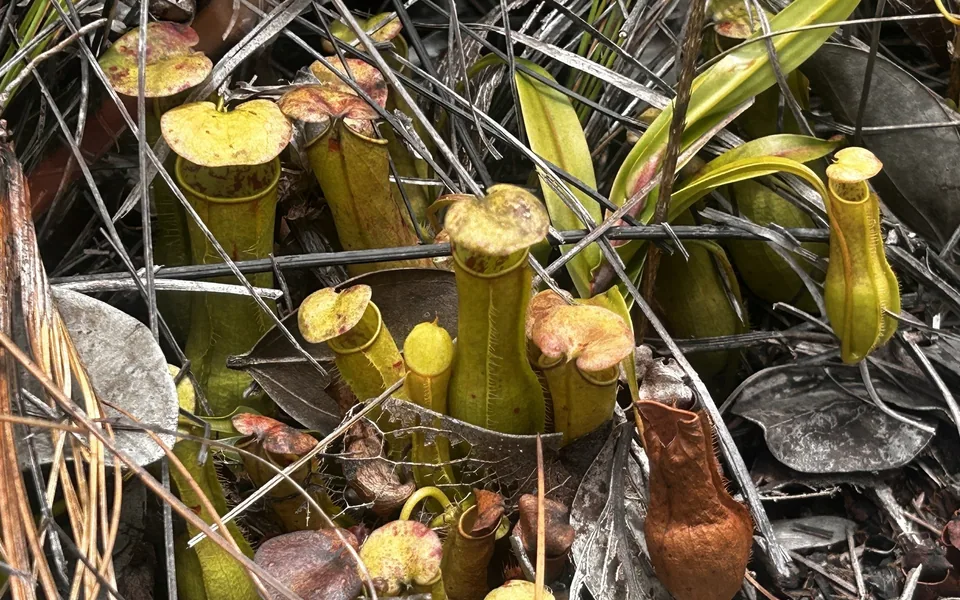
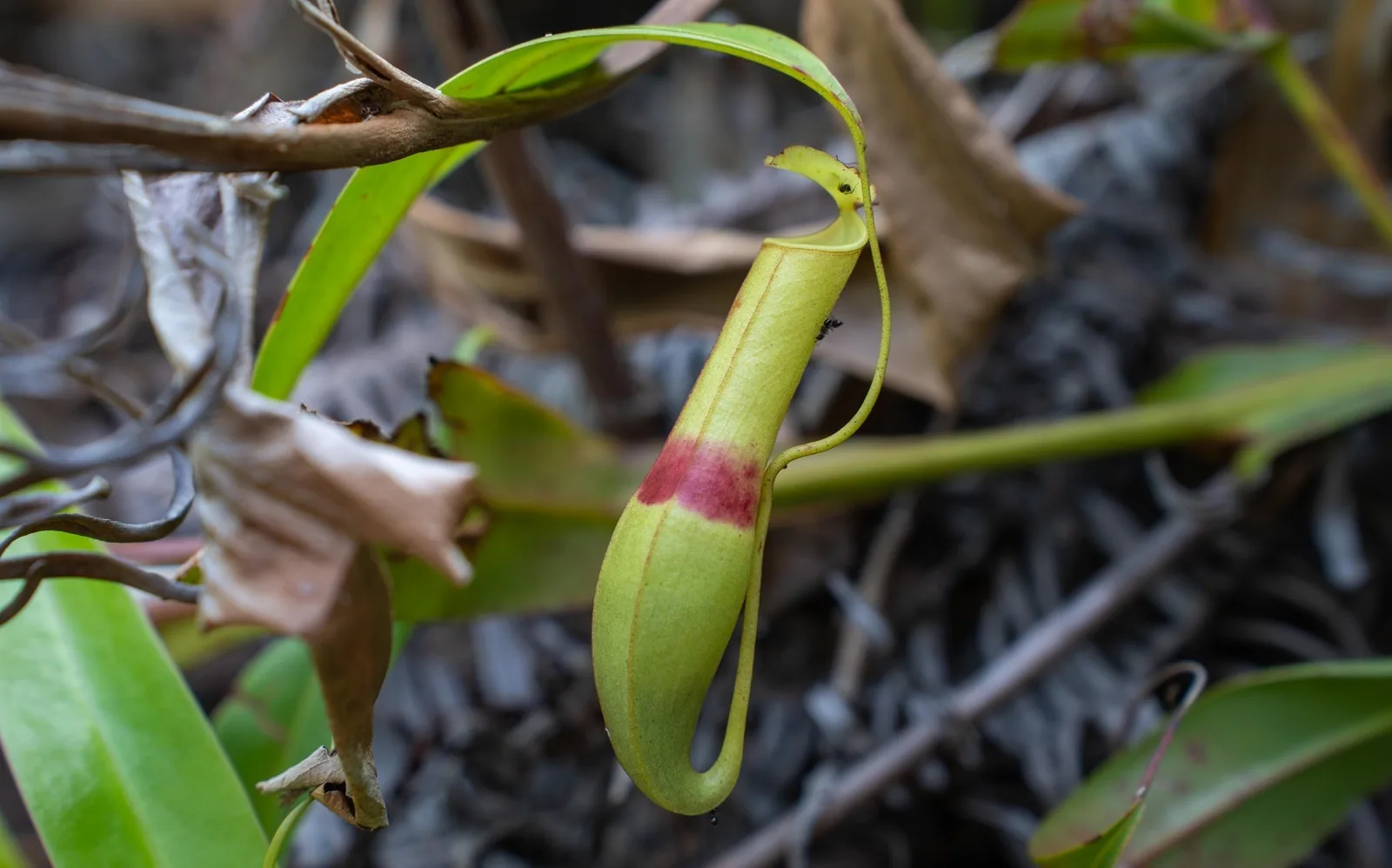
Nepenthes grow leaves that end in a tendril, and each tendril swells into a colorful, lidded pitcher filled with digestive fluid. Insects wander in, slip on the waxy rim, and become lunch. Some large species in the wild have even been found digesting small rodents. Yours will settle for a fly. They’re surprisingly good houseplants if you get the basics right, and a hanging basket dripping with pitchers is a showstopper.
Where to put it (light)
Bright, indirect to filtered light, with some gentle direct morning sun. A bright east or west window, or a strong grow light. Plenty of light = plenty of pitchers; not enough light and it just grows leaves with no pitchers.
Temperature
Most common hybrids and lowland species like 70–85°F (21–29°C) by day and prefer nights not colder than 55–60°F (13–16°C). Highland species like cooler nights. No dormancy required, unlike their Venus flytrap cousins.
Watering
Use distilled, rain, or reverse-osmosis water. Keep the soil moist but not waterlogged; unlike flytraps, Nepenthes do not want to sit in a tray of standing water. Water from the top when the surface begins to dry. If pitchers dry out, you can add a little distilled water to them.
Feeding
No fertilizer in the soil. Drop a small insect, a dried mealworm, or a pinch of fish food pellet into a pitcher every few weeks if it’s not catching its own. Feeding the pitchers, not the roots, is the rule.
Soil
A nutrient-free mix: long-fibered sphagnum moss with perlite, or peat and perlite 1:1. Never regular potting soil.
Humidity
60% or higher is the secret to consistent pitchers. Dry air = crispy tendrils and no traps. A humidifier or a bright bathroom window is ideal.
Common pests
Aphids, mealybugs, scale, and thrips. Fungus gnats in overly wet moss. Rinse foliage regularly and treat with insecticidal soap.
Propagation
Difficulty: Moderate to hard. Stem cuttings with 2–3 nodes, rooted in damp sphagnum moss in a humid, bright spot. Slow: expect 1–3 months for roots. Air layering also works.
Also worth knowing
Toxicity: non-toxic to pets. Mature size: vines can reach several feet. Repot every 1–2 years in fresh moss. Snip off dead pitchers at the tendril; new ones follow on fresh growth.
Snip off old brown pitchers, keep the humidity up, and let the plant do the pest control for a change.