Calathea: Beautiful, Moody, and Absolutely Worth the Therapy Bills
A stunning patterned prayer plant that folds its leaves at night. Famously fussy: it wants filtered water, medium indirect light, steady warmth, and humidity above 60%.
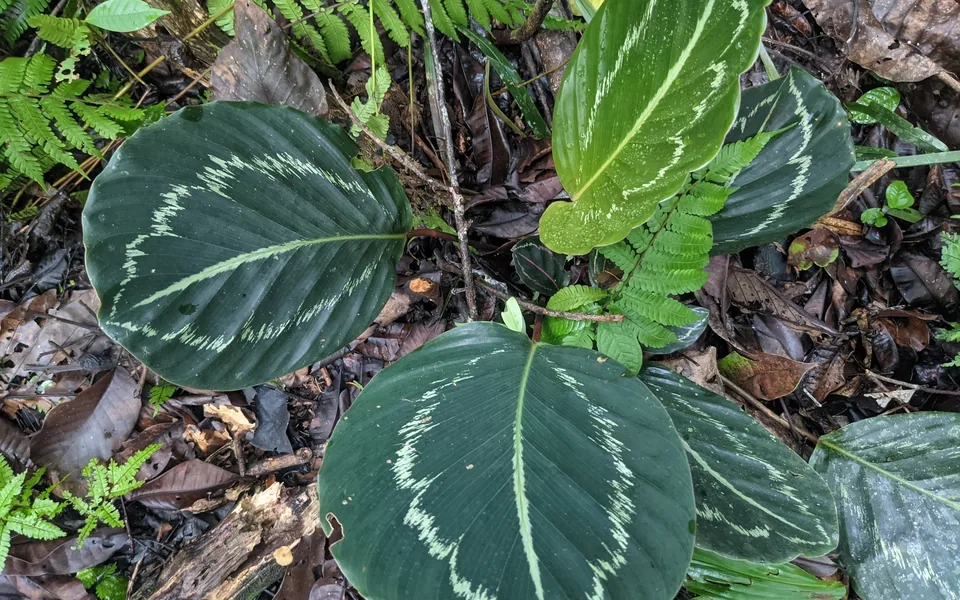
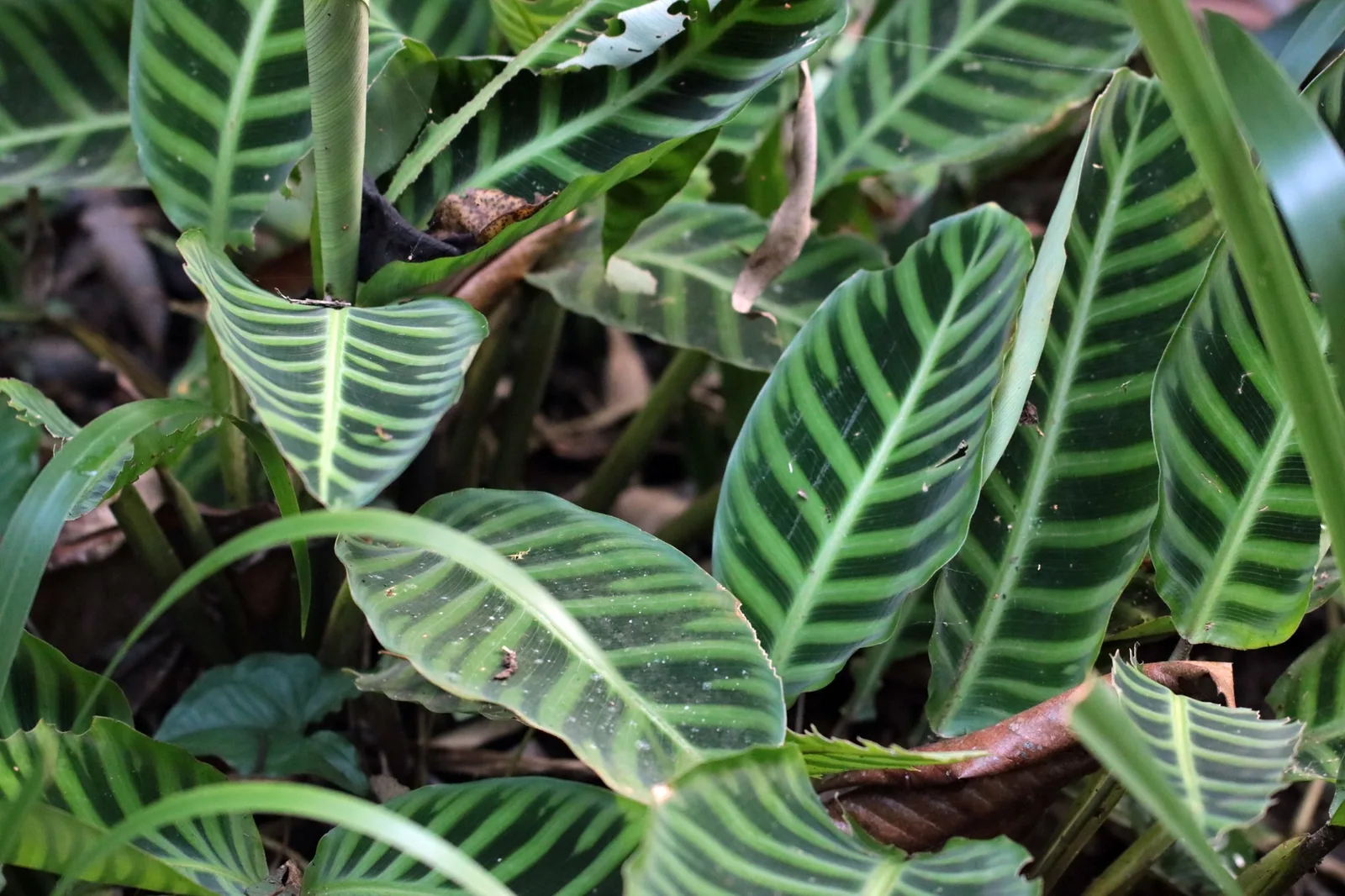
Calatheas (many now technically reclassified as Goeppertia) are the runway models of the houseplant world: stunning patterned leaves in stripes, dots, and pinstripes, with purple undersides, that fold up at night like hands in prayer. Popular varieties include Calathea orbifolia, ornata, makoyana, and the wildly popular “Rattlesnake” (C. lancifolia). They are also famously fussy. Browned edges and curled leaves are their way of telling you something’s wrong. Usually water quality or humidity.
Where to put it (light)
Medium to bright, indirect light. A north or east window is perfect. They tolerate lower light better than most patterned plants, but direct sun bleaches the pattern and scorches leaves.
Temperature
65–80°F (18–27°C). Keep it above 60°F (16°C) and away from drafts, AC, and heating vents. Sudden swings make it sulk.
Watering
Keep the soil consistently lightly moist, watering when the top inch dries. Never soggy, never bone dry. Use distilled, rain, or filtered water; calatheas are sensitive to the chlorine, fluoride, and minerals in tap water, which cause brown crispy leaf edges.
Feeding
Monthly in spring and summer with a balanced liquid fertilizer at quarter to half strength. Fertilizer salts also cause leaf browning, so less is more. Nothing in winter.
Soil
A peat- or coir-based mix with perlite that holds some moisture but drains well. Add a little orchid bark for airflow.
Humidity
60% or higher, non-negotiable if you want perfect leaves. Humidifier, pebble tray, plant grouping, or a bathroom. Misting alone won’t cut it.
Common pests
Spider mites are the number one enemy, especially in dry air. Also mealybugs, scale, thrips, and fungus gnats. Wipe leaves with a damp cloth regularly; it’s both preventive and cathartic.
Propagation
Difficulty: Moderate. Division only. At repotting time in spring, gently separate the rhizome clumps so each has roots and a few leaves, and keep the divisions warm and humid until established.
Also worth knowing
Toxicity: non-toxic to cats and dogs. Mature size: 1–3 ft (30–90 cm) depending on variety. Repot every 1–2 years. Trim brown edges with clean scissors following the leaf shape.
Get the water and humidity right and a calathea is spectacular. Get them wrong and you’ll be Googling “why are my calathea leaves brown” at 2 a.m. like the rest of us.